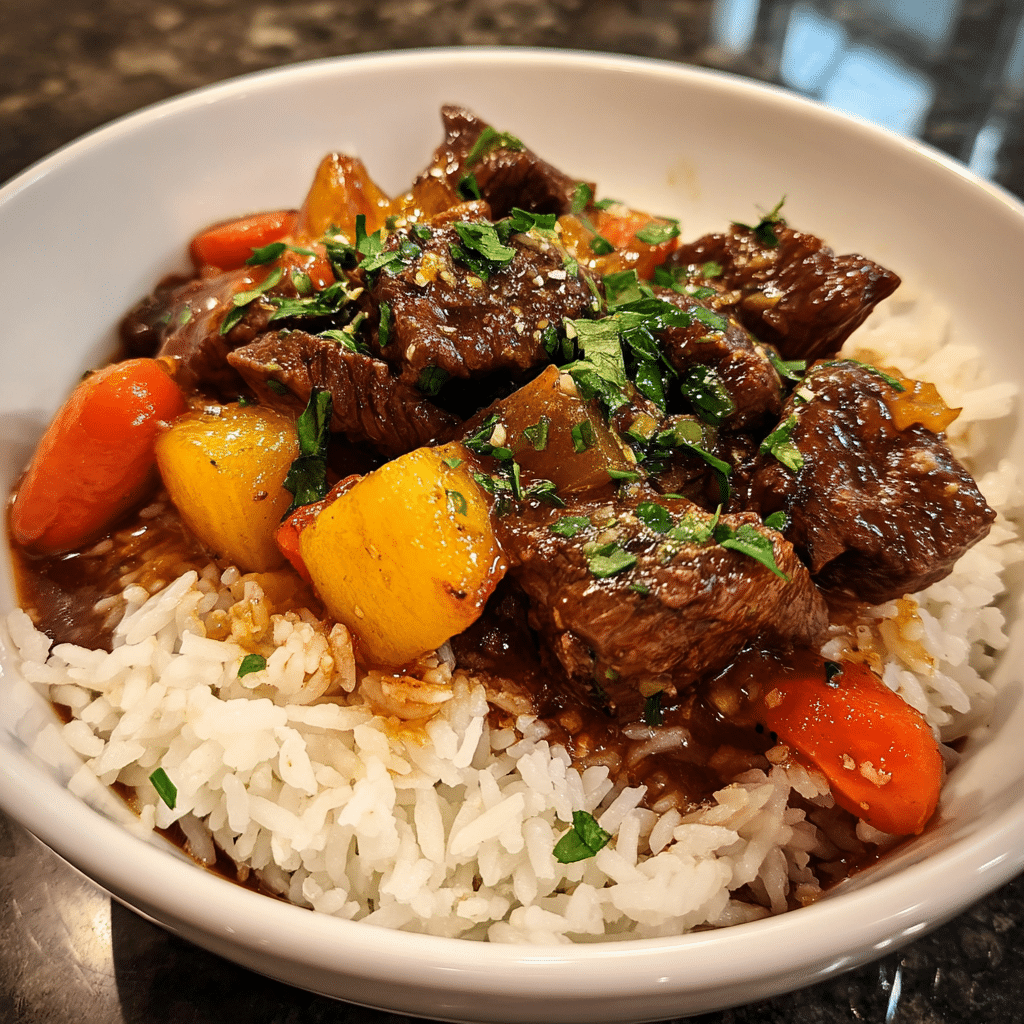
Why You’ll Love This Recipe
Beef Mechado is one of those comforting, slow-cooked Filipino dishes that fills the entire home with warmth long before it reaches the table. It is deeply savory, layered with tomatoes, aromatics, and tender beef that becomes softer with every minute of simmering. This is the kind of recipe you can prepare on a quiet weekend afternoon, letting the pot work its magic. I’ve even tried swapping part of the broth with homemade vegetable stock once, and it still turned out beautifully balanced. Whether you’re new to Filipino cooking or refining a family favorite, this version keeps the traditional spirit intact while offering room for variation.
Print
Classic Beef Mechado: A Rich, Slow-Simmered Filipino Stew You’ll Want to Make Again
- Total Time: 2 hours 20 minutes
- Yield: 6 servings
- Diet: Halal
Description
A classic Filipino beef stew braised in tomato sauce with potatoes, carrots, and bell peppers, known for its rich, hearty flavor.
Ingredients
- 2 lbs beef chuck, cut into large cubes
- 2 tbsp soy sauce
- 1 tbsp calamansi or lemon juice
- 3 tbsp cooking oil
- 1 large onion, chopped
- 4 cloves garlic, minced
- 1 cup tomato sauce
- 2 cups beef broth
- 2 medium potatoes, quartered
- 2 medium carrots, sliced
- 1 red bell pepper, sliced
- 1 green bell pepper, sliced
- 1 bay leaf
- Salt and pepper to taste
Instructions
- Marinate the beef in soy sauce and calamansi juice for at least 30 minutes.
- Heat oil in a pot and brown the beef on all sides. Set aside.
- In the same pot, sauté onions and garlic until fragrant.
- Add the beef back to the pot along with tomato sauce and beef broth. Stir well.
- Add the bay leaf, cover, and simmer on low heat for 1.5 to 2 hours or until the beef is tender.
- Add potatoes and carrots, continuing to simmer until vegetables are cooked.
- Add bell peppers and cook for an additional 5 minutes.
- Season with salt and pepper to taste, then serve hot.
Notes
- For richer flavor, sear the beef thoroughly before braising.
- You may substitute beef chuck with brisket for a more tender result.
- Add a splash of fish sauce for an umami boost.
- Prep Time: 20 minutes
- Cook Time: 2 hours
- Category: Main Dish
- Method: Braising
- Cuisine: Filipino
Ingredients
(Tip: You can find the complete list of ingredients and their measurements in the recipe card below.)
Beef chuck
This cut offers the perfect balance of meat and fat, becoming irresistibly tender after slow cooking. Its structure holds up well to long simmering without turning mushy.
Soy sauce
This adds depth, salinity, and a subtle umami backbone to the marinade. It also helps the beef absorb flavor from the start.
Calamansi or lemon juice
This acidity supports better tenderization and brightens the stew’s overall profile. Lemon works extremely well if calamansi is not accessible.
Garlic
Freshly minced garlic infuses the dish with warmth and aromatic richness. As it cooks down, it mellows and helps create a fuller sauce.
Onion
Sautéed onion acts as the foundational flavor, creating sweetness that balances the acidity of the tomatoes.
Tomato sauce
This is essential for the classic mechado profile. It transforms into a silky, savory gravy that coats each piece of beef.
Beef broth
This enhances the richness and ensures the sauce maintains body during long simmering. I once tried substituting part of it with chicken stock, and the difference was subtle.
Bay leaves
They introduce an herbal note that deepens the overall aroma of the stew.
Carrots
Carrots add brightness and a hint of natural sweetness while maintaining texture even after slow cooking.
Potatoes
These act as flavor absorbers, soaking up the tomato-based sauce beautifully.
Bell peppers
They bring a mild sweetness and an appealing color contrast to the finished dish.
Cooking oil
A neutral oil works best for browning the beef and sautéing aromatics without altering the taste.
Directions
Begin by marinating the beef in a mixture of soy sauce, calamansi or lemon juice, garlic, and pepper. This step ensures that the meat starts off flavorful even before it hits the heat. Once marinated, heat oil in a heavy pot and brown the beef on all sides; this caramelization contributes significantly to the stew’s depth. Remove the beef and sauté the onions until translucent, allowing them to develop their sweeter side. Stir in the tomato sauce and broth, then return the beef to the pot along with bay leaves. Allow this to simmer gently until the meat is nearly tender. Add the carrots, potatoes, and bell peppers, letting everything cook together until the vegetables are soft but not falling apart. Taste for seasoning as the stew thickens, adjusting salt or acidity when needed. The sauce should reduce to a rich, velvety consistency that coats every ingredient.
Equipment needed :
Must-Have Tools to Get Rolling
Here’s what you’ll want to have on hand:
Silicone Spatula – Durable, heat-resistant silicone spatula perfect for mixing, scraping, and spreading. Gentle on non-stick cookware and easy to clean.
Large pot – You’ll need this to boil the whole cabbage head and soften the leaves.
large bowl –Spacious, durable large bowl ideal for mixing, serving, or food preparation. Made from sturdy material and easy to clean.
Sharp knife – For coring the cabbage and slicing out the thick stem in each leaf. A paring knife works best.
Mixing bowl – A big bowl makes it easier to combine your meat and rice filling evenly.
Cutting board – For prepping cabbage leaves and rolling them like a pro.
9×13-inch baking dish – Ideal size to fit your rolled cabbage leaves snugly and prevent them from unraveling.
knife – A sharp, durable kitchen knife perfect for slicing, chopping, and dicing with ease
Servings and timing
This recipe usually serves 4 to 6 people. Preparation takes about 20 minutes, while cooking time ranges from 1.5 to 2 hours depending on how tender you want the beef. Allowing the stew to rest for a few minutes before serving improves flavor.
Storage/reheating
Store leftover Beef Mechado in an airtight container and refrigerate for up to four days. Reheat on the stovetop over low heat, adding a splash of broth or water to loosen the sauce if necessary. This dish freezes well for up to three months and reheats nicely after thawing.
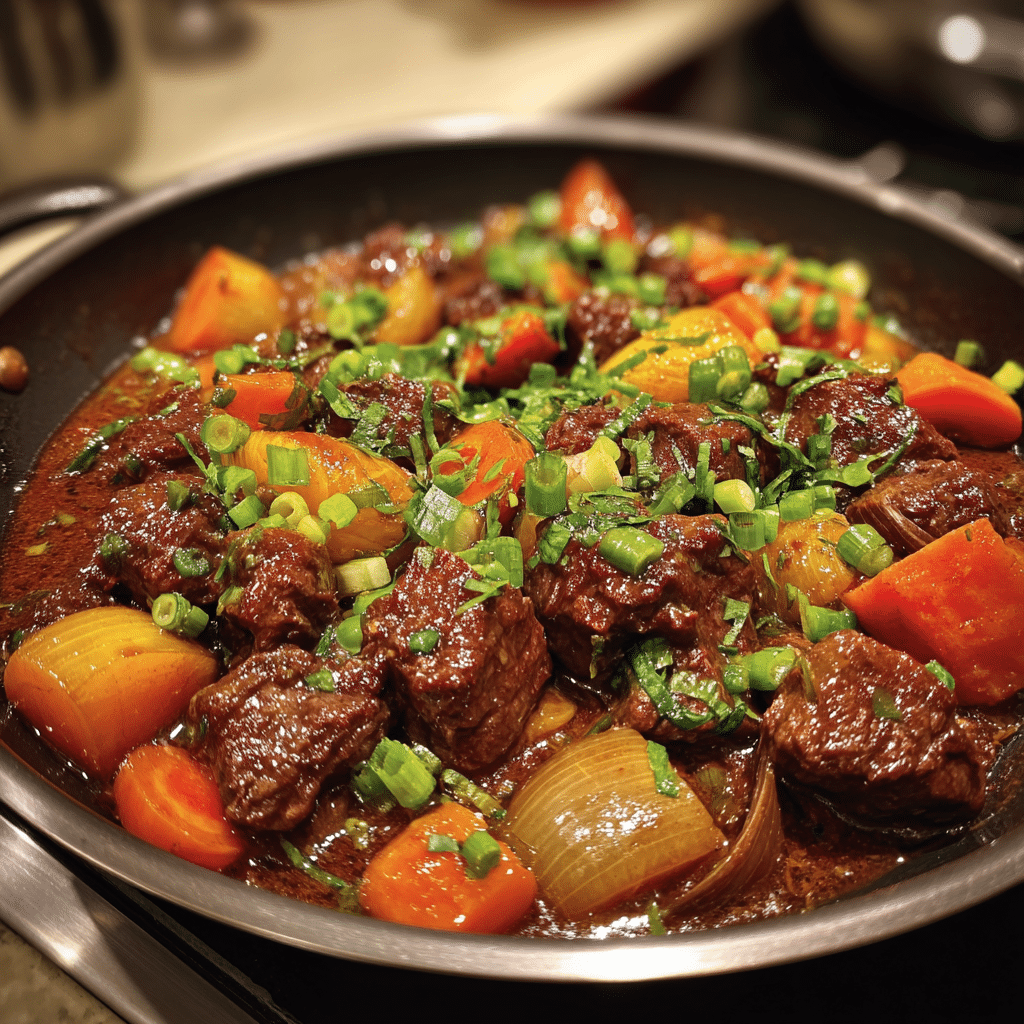
Variations and Customizations
Traditional Larded Mechado
Classic mechado sometimes uses pork fat inserted into the beef. This technique adds richness but requires extra preparation.
Spicy Mechado
Add fresh chilies or a spoonful of chili paste for a warming kick that complements the tomato base.
Mechado with Coconut Milk
A small splash of coconut milk creates a creamier, slightly sweeter sauce without overpowering the traditional flavor.
Oven-Braised Mechado
Instead of simmering on the stovetop, place the pot in a low oven for an even softer, slow-braised finish.
Mechado with Peas
Green peas add color and a fresh pop of sweetness, especially if added toward the end of cooking.
Chunky Rustic Mechado
Keep vegetables in larger pieces for a heartier, more rustic presentation.
Soy-Free Mechado
Use coconut aminos for a lighter but still umami-rich alternative to soy sauce.
Smoky Paprika Mechado
A small amount of smoked paprika enhances the stew with a subtle smoky depth.
Lighter Mechado
Swap some beef with chicken thighs for a milder version that still absorbs the tomato-based sauce beautifully.
Vegetable-Forward Mechado
Increase carrots, potatoes, and bell peppers, allowing the vegetables to share the spotlight with the beef.
FAQs
How long should I marinate the beef?
Marinating for at least one hour enhances flavor, though overnight marination yields an even richer result.
Can I use a slow cooker?
Yes, simply brown the meat first and cook on low for about eight hours.
Can I substitute lemon for calamansi?
Yes, lemon works well and maintains the stew’s traditional brightness.
What cut of beef is best?
Beef chuck is ideal because it becomes tender and flavorful during long cooking.
Can I make this dish ahead of time?
Yes, mechado tastes even better the next day as flavors continue to develop.
Why is my sauce too thin?
Continue simmering uncovered to allow evaporation and thickening.
Can I use fresh tomatoes instead of sauce?
Yes, but you may need to cook them longer to achieve the same richness.
Does mechado freeze well?
It freezes beautifully for up to three months.
Can I cook this without bell peppers?
Yes, though bell peppers add sweetness and depth.
How do I prevent the vegetables from getting mushy?
Add them during the last stage of cooking to preserve texture.
Conclusion
Beef Mechado is a timeless Filipino comfort dish that rewards patience with extraordinary depth of flavor. With tender beef, bright tomato sauce, and hearty vegetables, it is a meal that satisfies on any day. Whether you follow the traditional method or explore variations, this recipe offers endless opportunities to make it your own. Enjoy the slow, soothing process as much as the final dish.
Hungry for more? Visit our website for full recipes and follow us on Pinterest for daily foodie inspo you’ll love to pin!